
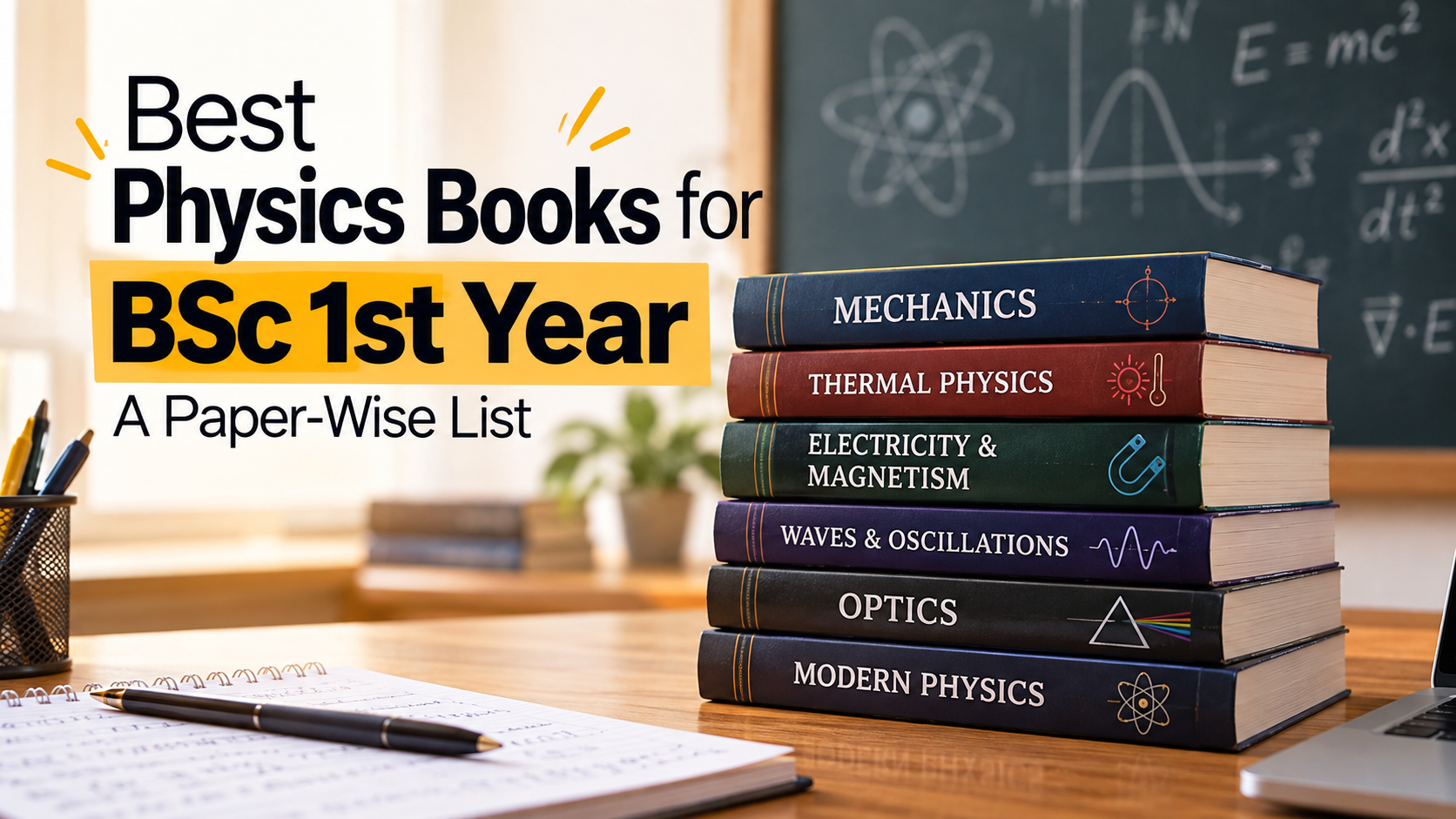
You open your syllabus PDF. Then your college book list. Then your seniors’ WhatsApp group. And somehow you get three sources and three completely different answers. Sound familiar?
Here’s the good news: you don’t need to buy every book on the internet (your wallet will thank you).
The best physics books for BSc 1st year is simply the one that matches your paper and your university syllabus. For most students, that means:
D.S. Mathur for mechanics
Brij Lal and Subrahmanyam for waves and oscillations
Murugeshan or Griffiths for electricity and magnetism
This guide sorts the options paper by paper, with prices, syllabus sources and honest pros and cons, so you can pick your books and get back to actually enjoying physics.
Short on time? Use the SemesterKart Book Comparison Tool to search by course and year, then compare retailer prices on one page.
What are the Best Physics Books for BSc 1st Year?
The best physics book for BSc 1st year depends on the paper you’re studying. For mechanics, D.S. Mathur’s Mechanics is the standard choice, and Kleppner and Kolenkow’s An Introduction to Mechanics is the one to pick if you want tougher problems.
For electricity and magnetism, Griffiths and Purcell are the most widely recommended. For waves and oscillations, N.K. Bajaj and A.P. French are popular picks. Whichever you choose, always check it against your own university’s syllabus.
The mechanics books above come from the reference list in the University of Delhi B.Sc. Physics (Mechanics) syllabus.
BSc 1st Year Physics Syllabus
The University Grants Commission introduced the Learning Outcomes-based Curriculum Framework (LOCF) in 2018 to make undergraduate courses more student-centred, as the University of Delhi curriculum framework records.
The UGC framework itself is available through the National Digital Library of India.
Each university then builds its own papers on top of it. Paper names and order differ, as the table shows.
University | Semester I | Semester II |
|---|---|---|
University of Delhi (B.Sc. Hons. Physics, UGCF 2022) | Mathematical Physics I; Mechanics; Waves and Oscillations | Mathematical Physics II; Electricity and Magnetism; Electrical Circuit Analysis |
University of Calcutta (B.Sc. Hons. Physics, CBCS) | Mathematical Physics I; Mechanics | Electricity and Magnetism; Waves and Optics |
Amity University (B.Sc. Physics, Mohali campus) | Electricity and Magnetism I; Mechanics | Electricity and Magnetism II; Oscillations and Waves |
The University of Delhi framework also recommends testing students on unseen problems instead of rote derivations.
That is why solved numericals matter when you pick a book.
Physics Books for BSc 1st Year List at a Glance
Use this table as a starting point. Then check each title against your own syllabus.
Paper | Main book | For deeper practice |
Mechanics | ||
Waves and Oscillations | N.K. Bajaj or A.P. French | |
Electricity and Magnetism | Griffiths or Purcell | |
Properties of Matter | D.S. Mathur, Elements of Properties of Matter | |
Mathematical Physics | Arfken, Weber and Harris |
You can also browse every title in one place on the BSc Physics books page on SemesterKart.
Best Mechanics Book for BSc 1st Year
This is a handpicked collection of the best textbooks for learning Mechanics in the first year of a BSc Physics course. These books explain core topics like Newton’s laws of motion, work and energy, conservation laws, rotational dynamics, gravitation, and special relativity in a clear, student-friendly way.
1. D.S. Mathur, Mechanics (S. Chand)
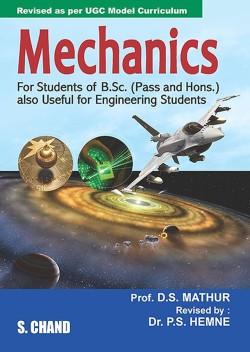
D.S. Mathur’s Mechanics is a standard first-year textbook for the Mechanics paper. It is published by S. Chand and has been revised over the years with co-author P.S. Hemne. It is a very common choice because it follows the Indian university syllabus closely.
What it covers: Mechanics is the study of how and why things move. The book explains the basics step by step, starting from vectors and Newton’s laws.
It then moves to work and energy, momentum and collisions, rotational motion, gravitation and oscillations, usually finishing with an introduction to special relativity. The exact chapters vary by university, so check them against your syllabus.
Who should buy it: It suits students who want to understand the syllabus and score well in university exams. It is a good main book for Semester 1, with Kleppner and Kolenkow as an extra for stronger students.
The SemesterKart listing shows 818 pages covering kinematics, dynamics, rigid body motion and gravitation, with solved examples.
2. Kleppner and Kolenkow, An Introduction to Mechanics
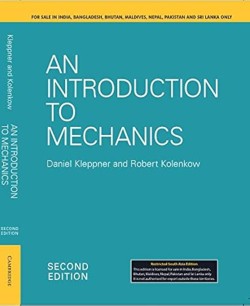
Kleppner and Kolenkow’s An Introduction to Mechanics is a well-known mechanics textbook from Cambridge University Press.
The two authors taught at MIT, and the book grew out of their physics course there. The 2nd edition (2014) is the one listed in Delhi University’s Mechanics syllabus.
What it covers: The book goes deeper into the same ground as a normal first-year mechanics paper.
That includes Newton’s laws, momentum, work and energy, angular momentum, and motion in rotating frames of reference.
It also covers central forces (such as planetary motion), oscillations and special relativity.
Who should use it: It suits students who already find the basics easy and want a real challenge. For most students, a good approach is to study from Mathur for the syllabus and exams, and use Kleppner and Kolenkow for tough problems and stronger concepts.
Best Waves & Oscillations Books for BSc 1st Year
This is a curated list of the most useful textbooks for studying Waves and Oscillations in the first year of a BSc Physics course. These books explain core topics like simple harmonic motion, damped and forced oscillations, and wave propagation in a clear, student-friendly way.
3. Brij Lal , Waves and Oscillations
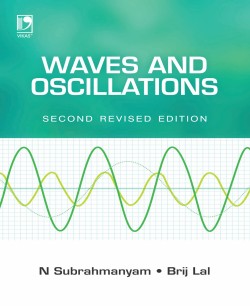
Brij Lal and N. Subrahmanyam’s Waves and Oscillations is a first-year BSc physics book published by S. Chand.
What it covers: The book explains how things vibrate and how those vibrations travel as waves. The topics, as described on the listing, are:
Simple harmonic motion (the back-and-forth motion of a spring or pendulum)
Damped oscillations (motion that slowly dies out, like a swing slowing down)
Forced oscillations and resonance (what happens when something is pushed again and again at the right rhythm)
Who should use it: It suits students who want a short, clear book to cover the waves and oscillations paper and revise for exams.
Best Books for Electricity and Magnetism
Electricity and Magnetism is one of the most important subjects in BSc Physics, covering how electric charges, currents, and magnetic fields interact.
The right textbook makes topics like Gauss’s law, electromagnetic induction, and Maxwell’s equations much easier to understand.
4. R Murugeshan, Electricity and Magnetism ( S. Chand)
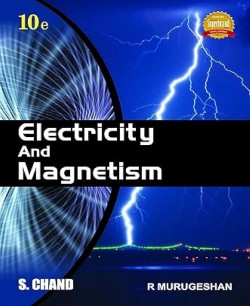
R. Murugeshan’s Electricity and Magnetism is a first-year BSc physics textbook published by S. Chand.
What it covers: The book starts with the basics of electric charge and builds up one topic at a time. The topics, as described on the listing, are:
Electrostatics (how electric charges create forces and fields)
Current electricity (how charge flows in circuits)
Magnetism (magnetic fields and their effects)
Electromagnetic induction (how a changing magnetic field creates electricity, as in a generator)
Who should use it: It suits students who want one book that covers the whole E&M paper with enough depth for university exams. If you want to go deeper later, add Griffiths or Purcell.
Properties of Matter and Mathematical Physics Books
Some universities add these topics in the first year. Cooch Behar Panchanan Barma University covers elasticity, surface tension and viscosity in its semester one paper.
5. R Murugeshan, Properties of Matter ( S .Chand)
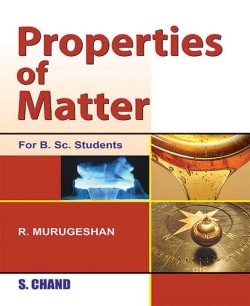
This is a short first-year BSc book from S. Chand
What it covers: It explains how materials behave, in three main topics:
Elasticity: why a spring or rubber band returns to its shape after you stretch it
Surface tension: why water forms droplets and some insects can walk on water
Viscosity: why honey flows slowly and water flows fast
6. H K Dass , Mathematical Physics ( S.Chand)
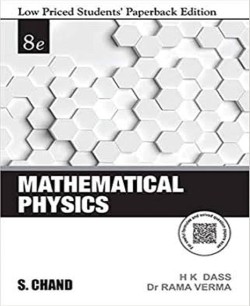
What it covers: It collects the maths that physics students use across the whole degree. The topics are vectors, matrices, differential equations, complex numbers and analysis, and special functions.
Think of it as a toolbox. Physics problems often need the maths first, and this book teaches that maths.
Best Author for BSc Physics Books: How to Choose
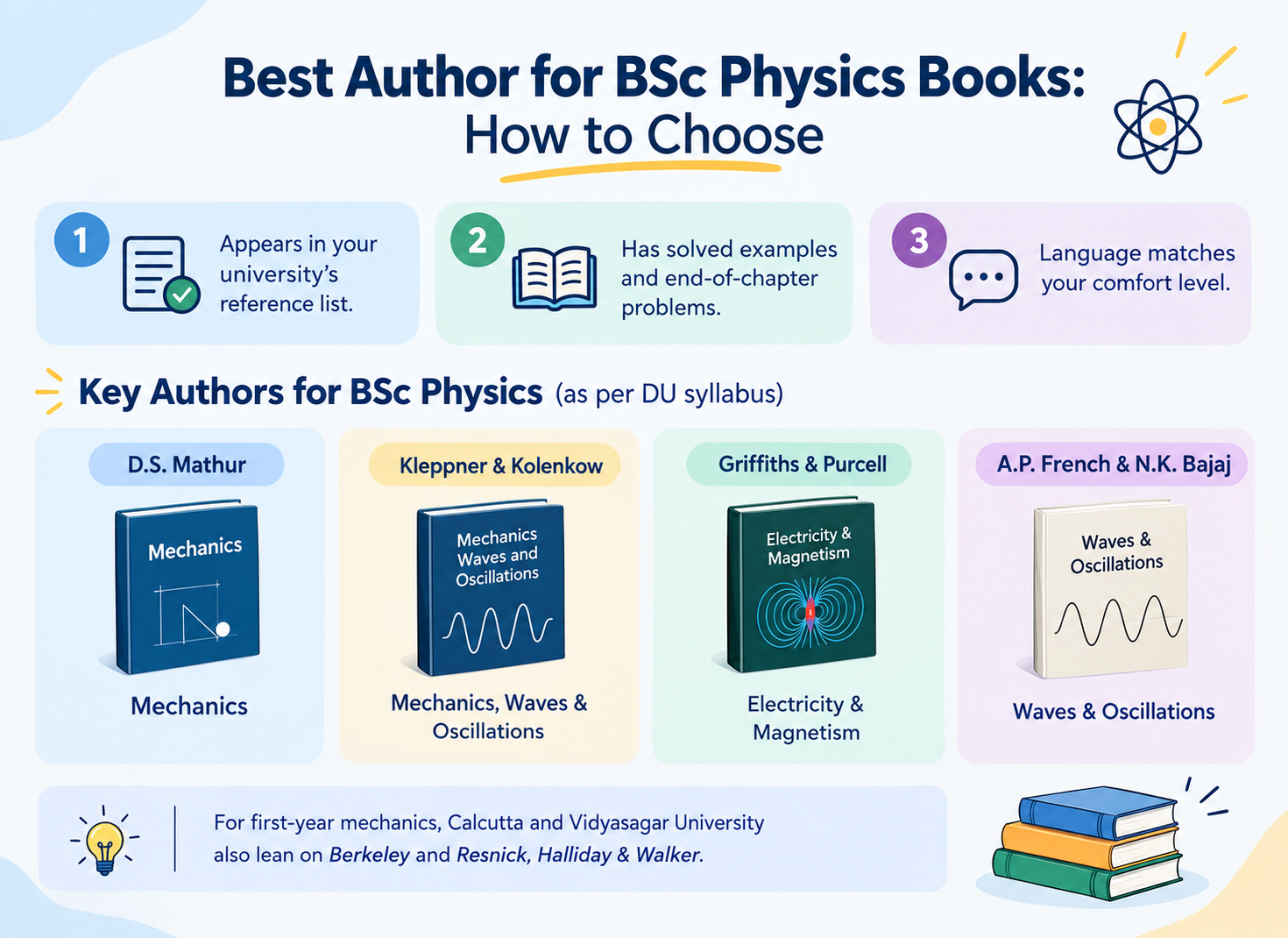
No single author wins every paper. Look for three things instead:
The author appears in your university’s reference list.
The book has solved examples and end-of-chapter problems.
The language matches your comfort level.
Here is how the main names line up, based on the University of Delhi B.Sc. (Hons.) Physics syllabus and its Mechanics syllabus:
D.S. Mathur: Mechanics (Delhi University’s B.Sc. Mechanics syllabus lists his book).
Kleppner and Kolenkow: mechanics, where it is the first essential reading, and waves and oscillations. du
Griffiths and Purcell: electricity and magnetism, where Griffiths is the first essential reading and Purcell is also listed. du
A.P. French and N.K. Bajaj: waves and oscillations, where both are listed as essential readings. du
The first-year mechanics lists at the University of Calcutta and Vidyasagar University lean on other books, such as Berkeley’s Mechanics and Resnick, Halliday and Walker’s Fundamentals of Physics. So your university’s own list matters more than any single “best” author.
Physics Books for BSc First Year Recommendations by Student Type
Imagine you are mostly worried about passing the semester exam. Pick Mathur for mechanics, Brij Lal for waves, and Murugeshan for electricity and magnetism.
Imagine you want to understand the ideas, not just solve numericals. Add Kleppner and Kolenkow for mechanics and Griffiths for electricity and magnetism.
Imagine you are aiming for an honours or research route. Keep the Berkeley Physics Course and Feynman Lectures nearby as extra reading.
The University of Delhi framework notes that first-year students arrive from very different school backgrounds and need extra support. Start with the main book and add the second one only when you are comfortable.
Where to Buy Physics Books for Bsc Online
The SemesterKart Book Comparison Tool lets you search by course, subject, year and semester. Each book page then lists Amazon, Flipkart and eBook options with ratings.
Frequently Asked Questions
Which is the best physics books for BSc 1st year?
There is no single best book, because the first year has several papers. D.S. Mathur suits mechanics, Brij Lal and Subrahmanyam suits waves and oscillations, and Griffiths or Murugeshan suits electricity and magnetism. Match each pick to your university syllabus.
Is D.S. Mathur enough for BSc 1st year mechanics?
SemesterKart's listing says it covers the full mechanics syllabus for most Indian universities. Check it against your own syllabus for extra topics. Add practice material if you plan exams like CSIR NET or GATE.
Which is the best author for BSc physics books?
It depends on the paper. D.S. Mathur is listed for mechanics, Griffiths and Purcell for electricity and magnetism, and Kleppner and Kolenkow for deeper mechanics practice. Check which names your own syllabus lists.
Can I use H.C. Verma for BSc 1st year physics?
Cooch Behar Panchanan Barma University lists H.C. Verma's Concepts of Physics for its first-semester multidisciplinary physics course. Its core mechanics paper names other books, so check what your university recommends.
Where can I buy BSc physics 1st year books online at a low price?
Use the SemesterKart Book Comparison Tool to compare Amazon, Flipkart and eBook prices for each title. Prices change often, so confirm the edition and seller before you pay.
Should I buy the latest edition of my physics book?
For Mathur's Mechanics, SemesterKart advises the latest edition because it has updated problem sets and corrections. For other titles, confirm with your department whether a specific edition is required.
Your Next Step
Pick one main book per paper, add one deeper book only if you need it, and check every title against your syllabus.
Then open the SemesterKart to compare prices across retailers. You can also browse all BSc books by subject.
About the author: Written by the SemesterKart Editorial Team. Learn more about SemesterKart.
Disclaimer: Book details and prices come from SemesterKart listings checked in October 2026 and from the university syllabus linked above. Reference lists differ by university, and prices and availability change. Confirm the edition, format and seller before you buy.